
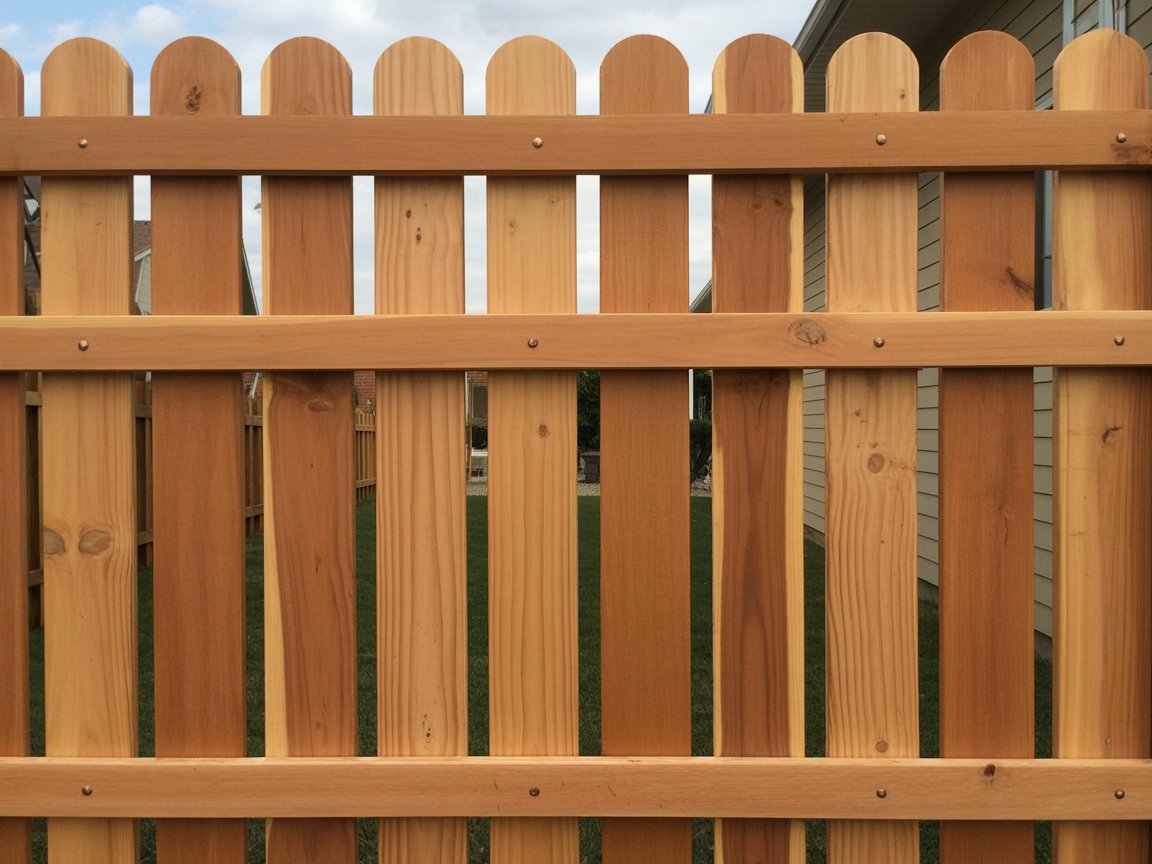
Why Cedar Privacy Fences in North Alabama Fail Early — And What Actually Lasts
Cedar fences in North Alabama's clay soil and humidity rarely last as long as they should. Here's what causes early failure — and what our contractors have learned after years of pulling out rotted posts across Madison County.
Last spring, we got a call from a homeowner in Harvest whose six-year-old cedar privacy fence was leaning badly along the back property line. Not sagging boards — the posts themselves had given out. When our crew pulled the first one, the bottom 18 inches crumbled in their hands. The cedar post had rotted clean through at the ground line. The boards above were still in decent shape. The installer had used 4x4 cedar posts, set them 20 inches deep in compacted clay, and walked away. Six years later, the homeowner was looking at a full replacement.
Our contractors see this every season. It's not a wood quality problem. It's a North Alabama installation problem — and once you understand what's actually happening underground, the solution is straightforward.
Why North Alabama Is Harder on Wood Than Most of the South
People assume Alabama is all red clay and think moisture behavior is uniform across the state. It isn't. The Tennessee Valley — Huntsville, Madison, Hazel Green, Harvest, and the surrounding corridor — sits on a belt of Ultisol soils. These are heavily weathered clay soils that have one particular characteristic that destroys fence posts: they hold water like a sponge and drain almost not at all.
Huntsville averages 55+ inches of rainfall per year, roughly the same as Seattle — but the Pacific Northwest drains it. Our clay doesn't. Average relative humidity in the Tennessee Valley runs around 73% year-round, and after a rain event, that clay at your post bases can stay saturated for days. The wood sits in contact with wet, dense clay, stays wet, and the rot process begins at the precise point where wood meets soil — right at the ground line.
Compound that with our temperature swing: we get winters that can drop to 15°F and summers that push 95°F. That freeze-thaw cycle is particularly brutal on posts set without proper drainage. Water in clay freezes, expands, and heaves posts upward slightly. Over five or six winters, posts that were borderline can rack loose entirely. This is especially common in Madison and the northern part of Madison County where the Ultisol clay belt is thickest.
The Post-Base Rot Problem: Where Cedar Fences Actually Fail
When cedar fences fail in this climate, it's almost never the boards. It's the posts, and it's almost always at the same place: right at grade, where the wood transitions from air contact above to soil contact below. That's where moisture concentrates, where oxygen is limited, and where the wood-rotting fungi that live in soil have direct access to untreated wood.
Here's the timeline our contractors have seen in North Alabama installations, drawn from the fences our contractors have replaced and repaired:
- Untreated cedar posts in clay soil, no drainage: Visible lean or failure at 5–8 years. Some as fast as 4 years after a wet winter cycle.
- Pressure-treated pine posts (ground-contact rated, .40 lb/ft³ retention), properly set with gravel drainage: 12–18 years before first signs of post degradation.
- Concrete-encased pressure-treated posts with proper depth: 20+ years, assuming no direct post-contact with standing water.
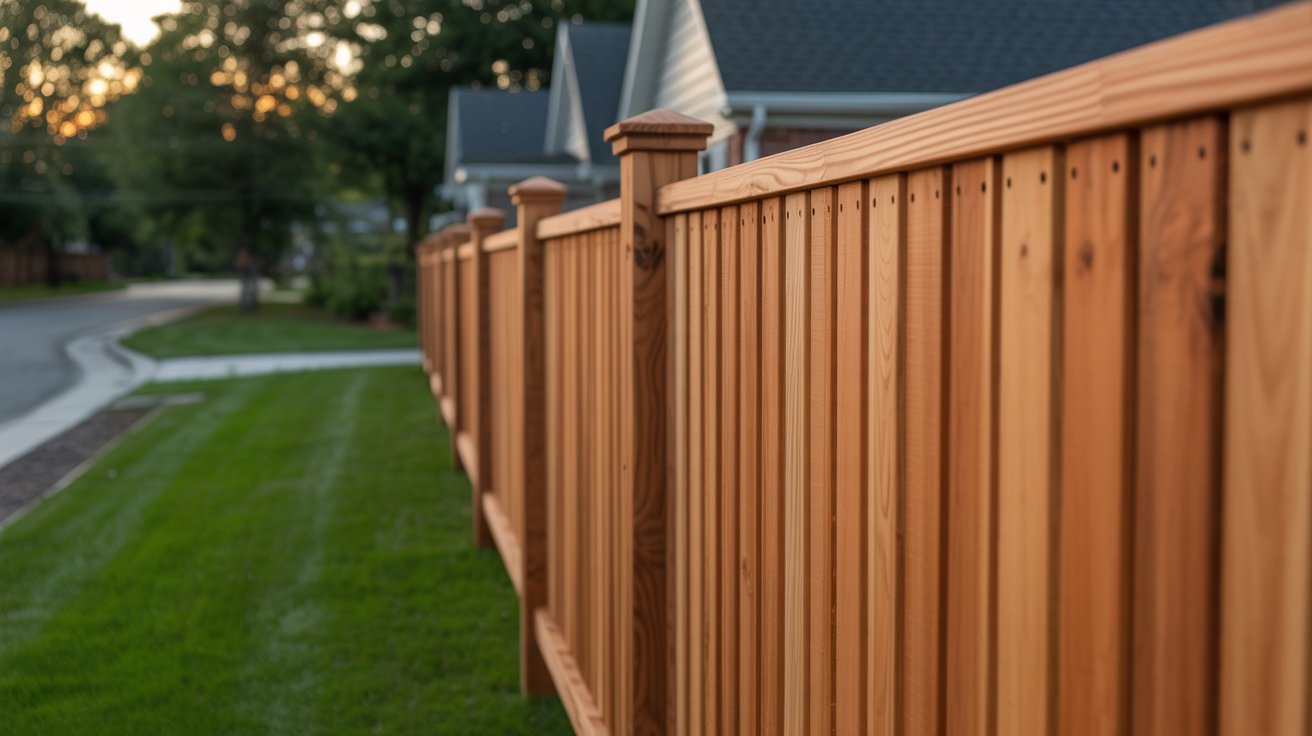
Cedar is a naturally rot-resistant species — in the right climate. Western red cedar performs well in the Pacific Northwest because the soil drains. Here, in clay-heavy Madison County, cedar's natural oils aren't sufficient to resist sustained moisture contact. The wood still rots. It just rots a little more slowly than untreated pine would in the same conditions.
The 3 Installation Mistakes That Cut Fence Life in Half
After pulling dozens of failed fence posts across Huntsville and the surrounding cities, our contractors have narrowed post failure down to three installation errors that account for the vast majority of early rot and lean. They're all avoidable.
1. Posts Set Too Shallow
A 6-foot privacy fence post needs to go at least 24 inches into the ground in Madison County — and we prefer 30 inches. The rule of thumb is one-third of the total post length underground, but in our clay soil, the extra depth matters more for stability against heave than it does in sandy or well-draining soil. Our contractors use 8-foot posts for 6-foot sections, setting 30 inches below grade. That gives us 2 feet underground plus the standard 6 inches of gravel base beneath the post.
What we find when our contractors pull failed fences: posts set 16–18 inches deep, sometimes less. At that depth, the lateral force from a 6-foot board in a 40-mph wind gust — which is common in the Tennessee Valley — levers the post loose at grade. Once the post starts moving, water gets into the void, and rot accelerates fast.
2. No Gravel at the Post Base
This is the single most impactful fix, and it costs almost nothing. Before setting any post, we pour 4–6 inches of #57 crushed stone into the bottom of the hole. The post sits on gravel, not clay. That gravel layer allows water to drain away from the base of the post instead of pooling against it. In clay soil, it's the difference between the post sitting in standing water for three days after rain versus draining in a few hours.
We also avoid tamping soil tight against the lower 6 inches of the post. That band needs to breathe. Compacted clay pressed against post wood is a rot incubator.
3. Using the Wrong Post Material
Cedar posts — even clear-grain western red cedar — are not rated for ground contact in humid climates. The wood species that performs reliably in our soil is pressure-treated southern yellow pine with a .40 lb/ft³ retention rating, which is the AWPA ground-contact standard. Look for the tag on the end of the post that says "UC4B" or "Ground Contact" — that's what you need. Posts labeled only "Above Ground" or "UC3B" should never go below grade in this climate.
Some installers use the less expensive .25 lb/ft³ pressure-treated posts, which are technically rated for ground contact but at the lower end of the retention range. In our clay soil, we won't use them. The .40 lb/ft³ ground-contact post is a modest cost upgrade that adds years to the installation.
Wood Species Comparison for North Alabama
If you're committed to a wood fence, here's an honest comparison of what's actually available from North Alabama lumber yards — Benson Lumber in Madison, 84 Lumber in Huntsville, and the big-box stores on University Drive — and how each performs in our climate.
| Species / Material | Availability Locally | Post Lifespan in Clay Soil | Board Lifespan (above grade) | Notes |
|---|---|---|---|---|
| Western Red Cedar (boards) | Good — most lumber yards carry 1x6 dog-ear and privacy boards | 5–8 years (not ground-contact rated) | 12–20 years with sealing | Fine for boards, never for posts. Beautiful grain, holds stain well. |
| Pressure-Treated Southern Yellow Pine (.40 lb/ft³) | Excellent — standard inventory at all local yards | 15–25 years | 10–15 years (green tint fades; stain when dry) | Best post material in this climate. Use for posts and rails; cedar for boards if budget allows. |
| Redwood | Poor — special order only; pricing is high | Not ground-contact rated; similar to cedar | 15–25 years with sealing | Performs well in dry climates; overkill cost for our humidity. Not our recommendation. |
| Douglas Fir (treated) | Occasional — sometimes available at 84 Lumber | 12–18 years if properly treated | 8–12 years | Less common locally; PT pine is easier to source and performs comparably. |
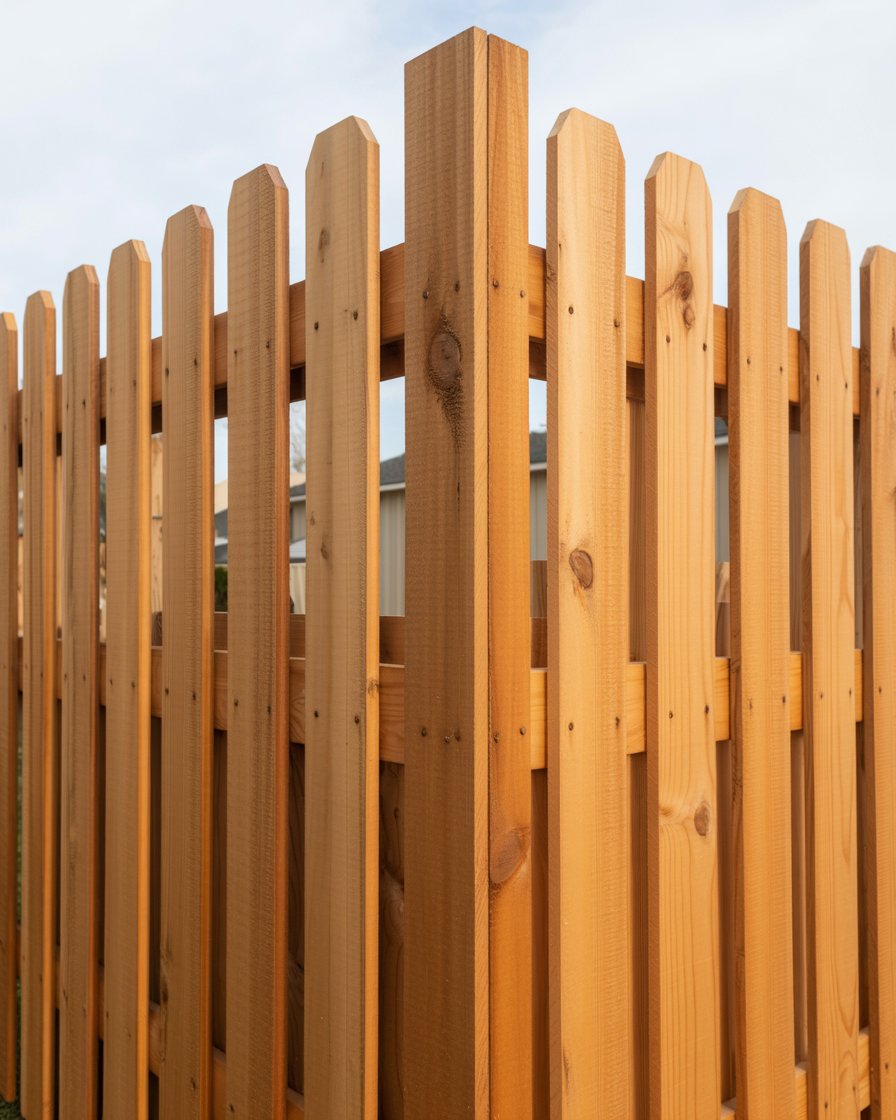
Our standard recommendation for a wood privacy fence in Madison County: pressure-treated pine posts and rails, western red cedar boards. You get the structural longevity of treated posts where it matters — underground — and the appearance and workability of cedar where you see it. This hybrid approach is what we'd build on our own properties.
Board Styles and Which Hold Up Best in Humidity
Not all privacy fence designs weather equally in high-humidity climates. The style you choose affects airflow, water drainage, and long-term appearance.
Board-on-Board
Our most commonly installed privacy style, and the best performer in humid conditions. Boards overlap by 1–1.5 inches on alternating sides, which means each board has an air gap on at least one face. Water that gets behind boards can drain down and out. The overlapping design also allows for seasonal wood movement without boards splitting — important in a climate with 80°F temperature swings. Board-on-board also provides full privacy from both sides.
Dog-Ear (Solid Panel)
The most common fence you'll see in older subdivisions around Hazel Green and Harvest. Boards are placed edge-to-edge with no gap, creating a solid panel. The problem: zero airflow means boards stay wet longer after rain. Bottom rails and the lower 12 inches of boards are especially prone to rot. If you're set on this style, a bottom rail raised 2 inches off grade and a drip edge along the bottom helps. We steer most customers toward board-on-board instead.
Shadowbox
Alternating boards on opposing sides of the rails with a 1-inch gap in between — similar to board-on-board but with visible gaps. Very good airflow, which extends board life. It does not provide complete privacy (you can see through at an angle), but it handles our humidity well and looks clean from both sides. Popular in subdivisions where the HOA requires "neighbor-friendly" fencing.
Staining and Sealing: The Schedule That Actually Protects Wood in Alabama
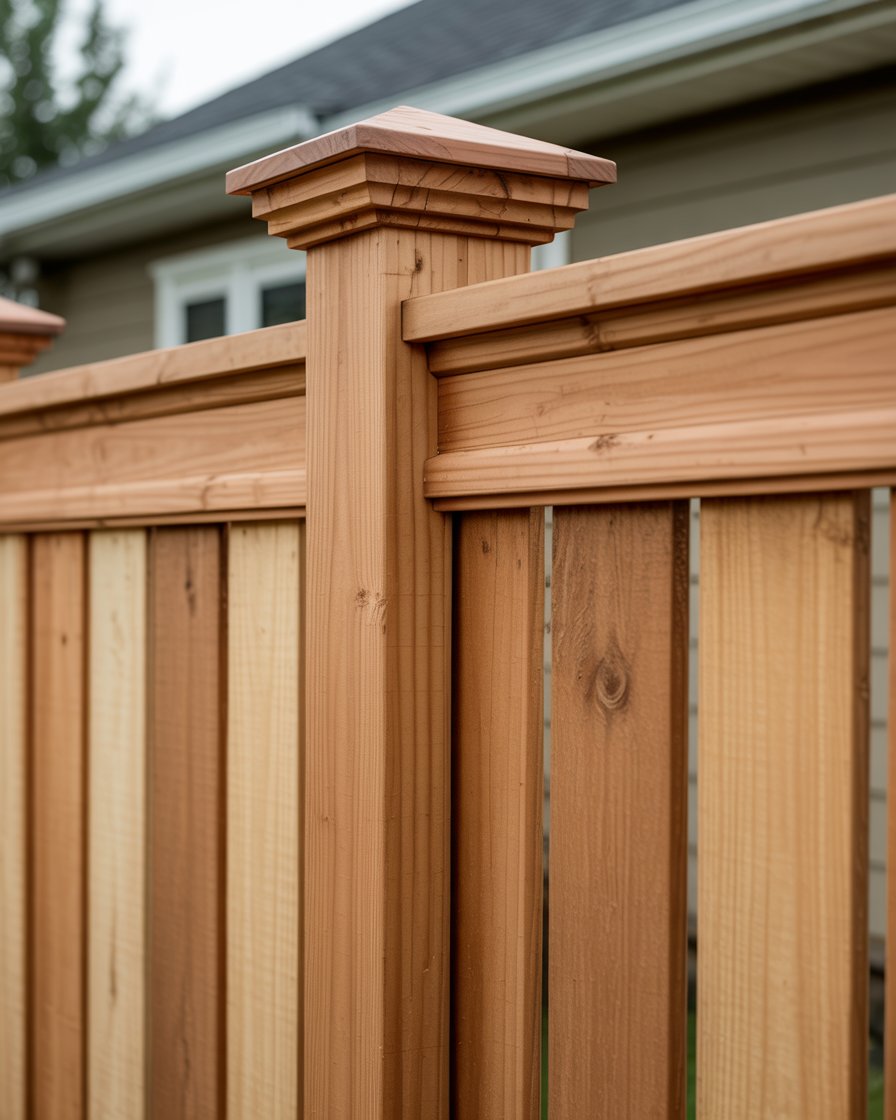
Unfinished cedar in North Alabama's humidity will start showing gray discoloration within 6 months and surface cracking within 18 months. That's not rot — it's UV and moisture cycling — but it opens the wood up to faster moisture penetration over time. A proper sealing schedule dramatically extends board life.
Here's what we recommend, based on our climate:
- New fence: Wait 6–8 weeks before applying any stain or sealer. Pressure-treated wood needs to dry; cedar needs to "weather open" slightly to accept penetrating finish. Applying too early traps moisture.
- First seal: Apply a penetrating oil-based stain-sealer (not a film-forming paint) at the 6–8 week mark. Cabot Australian Timber Oil and Armstrong Clark Semi-Transparent both perform well in humid climates. Apply two coats to end grain on board tops.
- Recoat schedule: In North Alabama's humidity, plan to recoat every 2–3 years, not the 5-year schedule some product labels suggest. Those estimates are calibrated for drier climates. Budget for it when you're planning the project.
- What to avoid: Film-forming paints and solid stains look good for 12 months and then peel as moisture gets under the film. Once a film finish peels, the wood is more exposed than if you'd never sealed it at all.
When Wood Is Still the Right Call — and How to Do It Correctly
Wood privacy fencing is not the wrong choice for North Alabama. It's a wrong-installation problem more than a wrong-material problem. Here's when wood makes sense and how to make it last:
Wood is the right call when:
- Budget is the primary constraint — a properly installed wood privacy fence is still less expensive upfront than vinyl or aluminum
- Your HOA requires wood or prohibits vinyl aesthetics
- You prefer the appearance and want to customize stain color over time
- The run is short (under 100 linear feet) and you're comfortable with maintenance
Do it right:
- Use pressure-treated .40 lb/ft³ posts rated UC4B for ground contact — not cedar, not the cheaper .25 lb/ft³ grade
- Set posts at 30 inches minimum depth in Madison County clay
- Pour 4–6 inches of #57 crushed stone in the hole base before setting the post
- Use concrete to backfill the top 12 inches of the hole, sloped away from the post to shed water
- Keep the bottom board at least 2 inches above finished grade — do not let wood contact soil
- Seal within 8 weeks of installation and recoat every 2–3 years
Alternatives That Outlast Wood in This Climate
If longevity is the priority and budget allows, there are two materials we consistently recommend over wood for North Alabama homeowners who don't want to think about maintenance.
Aluminum fencing doesn't rot, rust, or absorb moisture. Posts are hollow aluminum set in concrete — no wood-soil contact anywhere. Our contractors have installed aluminum fences in Huntsville that are 15 years old and look identical to the day they went in. The material cost is higher, but when you factor out resealing, board replacement, and eventual post replacement, the 20-year cost is competitive with wood. The trade-off: aluminum is an open-picket design, not a privacy fence.
Vinyl privacy fencing is the closest low-maintenance substitute for wood privacy style. Vinyl posts and panels don't rot, don't absorb moisture, and never need painting or staining. The downside in our climate is thermal expansion — vinyl expands and contracts more than wood with temperature change, and in a 95°F summer following a 15°F winter, panels installed too tight can buckle or gap. Proper installation accounts for this with expansion gaps, but it's something to confirm with your installer. Vinyl is also more expensive upfront than wood.
Composite fence boards (wood-plastic composite, similar to Trex decking) are starting to appear in residential fencing and perform well above grade. We don't use them for posts — the structural behavior underground hasn't proven out yet — but composite boards on treated posts is a hybrid we're watching. Currently more expensive than cedar boards with less track record in our climate.
Frequently Asked Questions
How long does a cedar privacy fence actually last in Huntsville?
Installed correctly — pressure-treated posts at 30 inches depth with gravel drainage, cedar boards sealed and maintained — a cedar fence in North Alabama should last 15–20 years. Installed the way most budget contractors do it (cedar posts, 18–20 inch depth, no drainage, no sealing schedule), expect 5–8 years before posts fail. The difference is entirely installation and maintenance, not the material itself.
Can I use cedar posts if I seal or paint them?
Not reliably. Surface treatments don't penetrate deeply enough to protect the bottom 18 inches of a post in sustained contact with wet Ultisol clay. The moisture gets to the wood through the end grain at the bottom of the post and through any small cracks in the surface coating over time. Pressure-treating forces preservative deep into the wood structure — surface sealing cannot replicate that protection in a ground-contact scenario. Use cedar for your boards; use treated pine for your posts.
What causes fence posts to lean in North Alabama?
Two causes, often together. First, rot at the base weakens the post's connection to the surrounding soil, and wind load levers it over. Second, freeze-thaw heaving in the clay soil gradually pushes posts upward over multiple winters, reducing effective depth. A post that was set at 20 inches can effectively be at 14 inches after several freeze-thaw cycles if the concrete backfill doesn't extend far enough down. Setting posts at 30 inches with concrete backfill from 6 inches below grade to the surface resists both.
Is it worth repairing a leaning wood fence or should I replace it?
It depends on what's leaning. If the boards are sound and only one or two posts have rotted out, post replacement is a reasonable repair — we replace individual posts by sistering a new treated post alongside the failed one, concreted in properly, and transferring the rail attachment. If more than 30% of your posts are compromised, a full replacement is usually more cost-effective than chasing repairs for the next few years. When we do estimates, we probe every post base before quoting — that tells us immediately whether we're looking at a repair or a replacement.
Related Resources
- Privacy Fence Installation — Our approach to building privacy fences in North Alabama
- Fence Cost Guide — What to expect for pricing across wood, aluminum, vinyl, and chain link
- Fence Maintenance Guide — Sealing schedules, what to inspect, and when to call us