
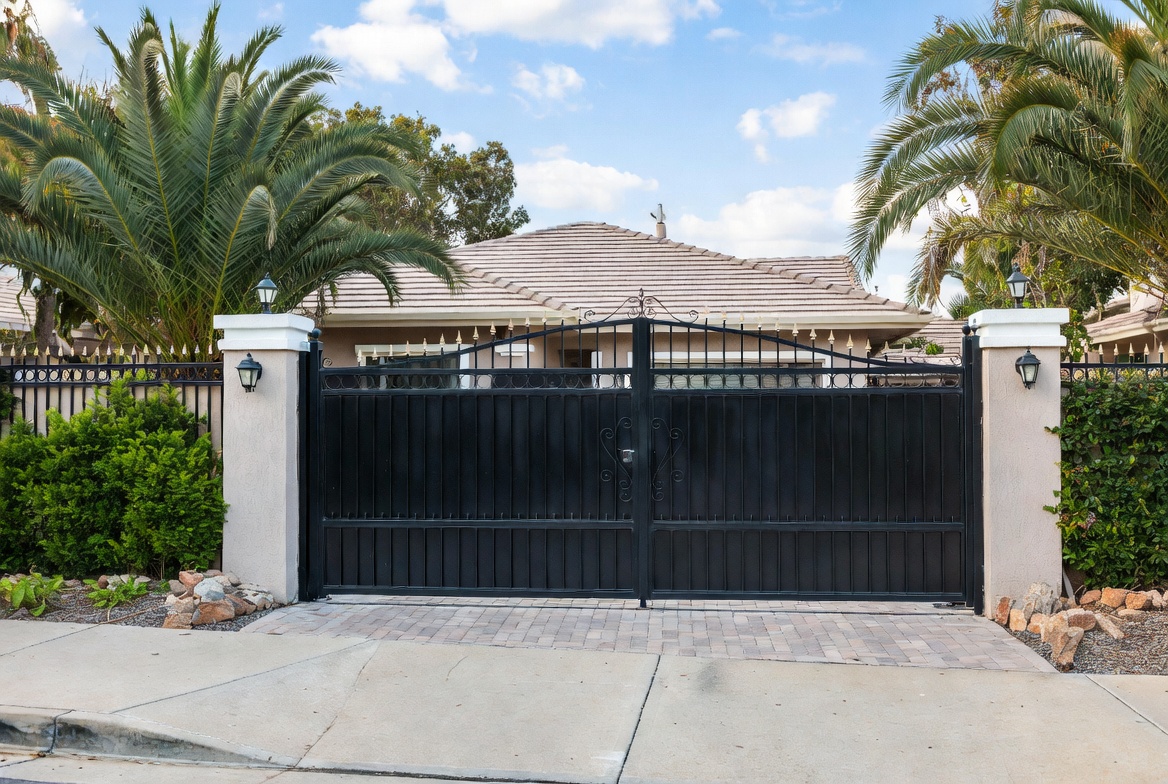
Storm Damage Fence Repair in North Alabama: When to Fix It, When to Replace It
North Alabama storms leave fence damage that ranges from a few loose boards to 80 feet of posts pulled clean out of the ground. Here's how we assess what's worth repairing, what needs full replacement, and what to document before you call your insurance adjuster.
The Morning After a Derecho
You walk out the back door and 40 feet of your privacy fence is flat on the ground. The posts didn't just lean — they snapped at the base or pulled right up out of the saturated soil, still wearing their concrete collars. It's a scene we respond to regularly after severe weather rolls through the Tennessee Valley, and the first thing we tell homeowners is: don't move anything yet. Take pictures. We'll walk you through the rest.
North Alabama isn't just occasionally stormy — it's in one of the most active severe weather corridors in the Southeast. Huntsville averages more than 50 thunderstorm days per year. The Tennessee Valley's geography funnels derecho events and straight-line winds down the valley in a way that surprises people who moved here from other parts of the country. The April 2011 outbreak hit Madison County directly and was one of the most destructive tornado events in Alabama history. Since then, our contractors have repaired and replaced hundreds of fences after major storm events — and our contractors have learned exactly what to look for and how to evaluate what's actually salvageable.
The 4 Categories of Storm Fence Damage
Not all storm damage is the same, and the category your fence falls into drives the entire repair-versus-replace decision. When we do a post-storm assessment, we're mentally sorting every section of fence into one of four buckets.
Category 1: Cosmetic Damage
This is the best-case scenario. A few boards popped loose from the rails, a section has a slight lean of a few degrees, or some pickets cracked but the rails and posts are solid. The structure itself is intact. Cosmetic repairs typically run $150–$400 depending on how many boards need replacing and whether any rails took damage. If your posts are plumb and your rails are sound, this is an easy fix.
Category 2: Structural Damage
Posts are cracked or broken at the base, a significant section has gone down, or one or more panels have separated from their posts. The structure is compromised but not a total loss. This is the most variable category — cost depends heavily on how many posts are involved, fence type, and whether we can salvage the existing rails and boards. Partial replacements in this range commonly run $400–$1,500 for a single damaged section, though larger runs of structural damage can exceed that.
Category 3: Total Loss
The fence is flat on the ground, multiple sections are down, and posts have been pulled out or broken at grade across a significant portion of the run. At this point, full replacement is almost always more economical than attempting to repair. You're paying labor to dig out old concrete footings, reset posts, and then repair what's on top. The math rarely works out in favor of repair once you're past about 40% of posts damaged across a fence line.
Category 4: Hidden Damage
This is the one homeowners miss most often, and it's the one we flag on nearly every post-storm inspection. The fence looks mostly okay — it's still standing, boards are intact — but something isn't quite right. The gate won't latch properly. A section has a subtle bow. When you push on a post near the top, it moves. Underground, the post has heeled over in the saturated clay, or the concrete footing has cracked and shifted. Leave this unaddressed and you'll be back to Category 3 after the next storm.
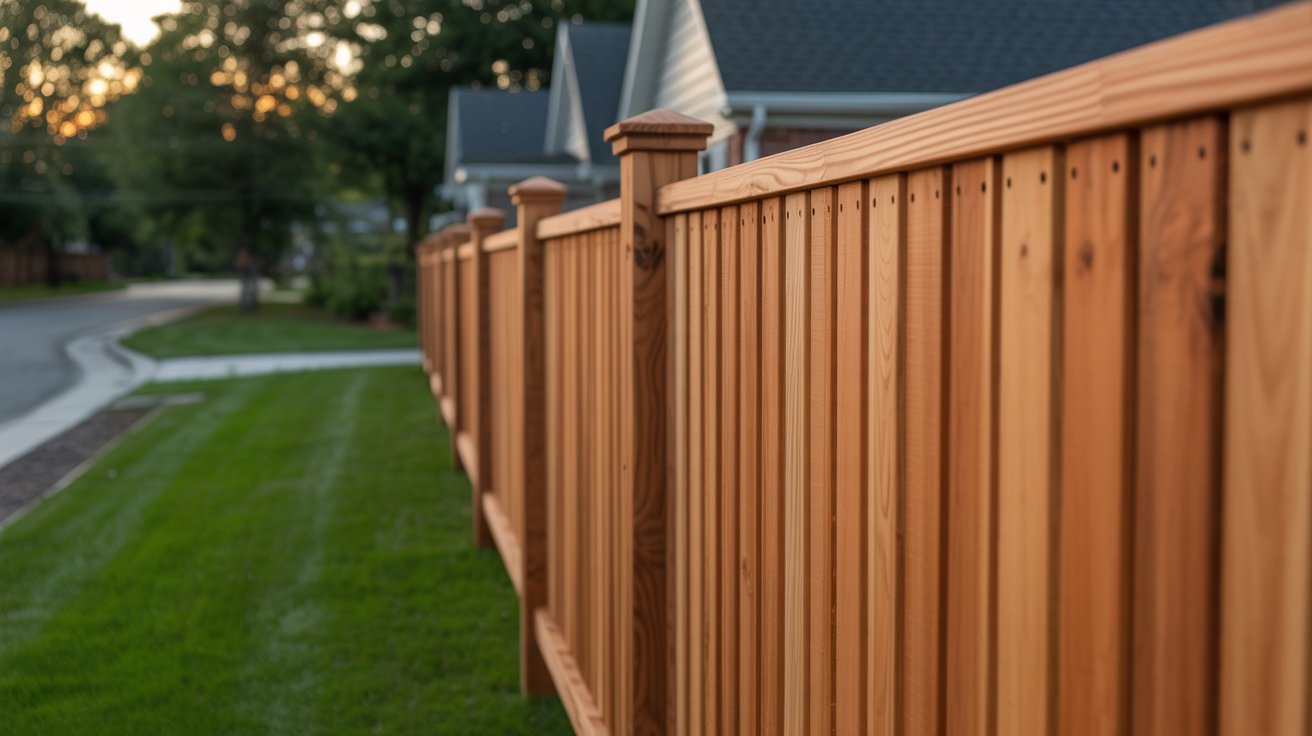
How to Assess Your Fence After a Storm
Here's what we recommend homeowners check before calling us — and where to stop and let a contractor take over.
What you can check yourself
- The 2-inch push test on every post along the fence line (see above)
- Post bases: Look for cracking in the wood at or near ground level, visible heeling (post leaning in the ground rather than above it), or rising — where the frost or saturated soil has pushed the post upward and the concrete collar is visible above grade
- Rails and boards: Walk the fence and check for boards that are structurally intact but have pulled loose from the rails — these are usually a simple re-nail or screw repair
- Gate alignment: A gate that suddenly won't latch, drags on the ground, or has visible gaps at the frame corners is a reliable indicator that one or both gate posts have shifted underground
- Obvious breaks: Boards split lengthwise, rails snapped, sections leaning more than 10–15 degrees
What needs a contractor's eyes
- Any assessment of post integrity below grade — you can't see what's happening to the concrete footing or the buried section of the post
- Fence lines with mixed damage (some sections fine, some down) where the repair-vs-replace decision needs a cost comparison
- Anything involving a shared fence line with a neighbor, where liability and cost-sharing need to be sorted out before work starts
- Insurance estimates — adjusters want a written contractor assessment, not a homeowner's guess
Repair vs. Replace: The Decision Matrix
This is the question every homeowner asks us, and the honest answer is that it depends on four factors: how many posts are damaged, the age and type of the fence, the mix of structural vs. cosmetic damage, and whether you're filing an insurance claim. Here's how we think through it:
| Damage Situation | Recommendation | Typical Cost Range |
|---|---|---|
| Loose boards, no post movement, rails intact | Repair | $150–$400 |
| 1–2 posts broken or heeled, boards salvageable | Partial repair (replace posts, reuse boards) | $350–$800 |
| 1–2 sections completely down, rest of fence solid | Partial replacement (those sections only) | $600–$1,800 |
| Posts fine but panels damaged across multiple sections | Repair (replace boards/panels, keep posts) | $400–$1,200 |
| Mix of post and board damage, fence 10+ years old | Full replacement usually more economical | Full fence price |
| More than 40% of posts damaged or failed | Full replacement | Full fence price |
| Fence flat on ground, multiple sections, posts out | Full replacement | Full fence price |
The 40% threshold isn't arbitrary — it's where the labor math flips. When we're pulling out more than four in ten posts, resetting footings, and then repairing on top of that, the labor cost approaches or exceeds what a full replacement would cost for an equivalent fence. And with a full replacement, you get a complete new structure with a full warranty, not a patchwork of old and new that ages unevenly.
Fence age matters too. A 6-year-old cedar privacy fence with post damage is worth repairing. A 17-year-old fence that was already showing its age before the storm came through is probably a better candidate for replacement — especially if your insurance claim covers it.
Documenting Damage for Insurance
How you document storm damage in the first 24 hours significantly affects how smoothly your insurance claim goes. Our contractors have worked alongside homeowners through dozens of storm claims, and here's what adjusters actually need.
Photograph before any cleanup
This is the most important step and the most commonly skipped one. Before you move any debris, pull any boards off the ground, or prop anything back up — photograph everything. Wide shots showing the full extent of the damage, close-ups of broken post bases, photos of the fence flat on the ground. If a neighbor's tree fell through your fence, photograph the tree in place before it's moved. Adjusters cannot adjust for damage they can't see.
Measure the damaged sections
Walk the fence line and measure the damaged runs in linear feet. Write it down. "A bunch of fence is down" is not something an adjuster can work with. "42 linear feet of 6-foot cedar privacy fence is down in sections A and C; 18 additional linear feet in section B show post heeling and will require post replacement" gives them something to process.
Document pre-storm condition
Adjusters want to know the fence was in reasonable condition before the storm. If you have photos from a backyard party or a Google Street View capture showing a standing, intact fence — save those. Google Street View imagery is time-stamped and has been used successfully to establish pre-loss condition in insurance disputes.
Get a written contractor estimate first
Call us before you call your adjuster. A written estimate from a licensed contractor carries significantly more weight than your own assessment, and it gives your adjuster a specific, line-item cost to work from. We provide written estimates that break out materials, labor, and linear footage — exactly what insurance companies need to process a claim efficiently.
Why North Alabama Clay Soil Makes Storm Damage Worse
This is something we explain on almost every post-storm assessment, because it catches homeowners off guard. When a derecho or slow-moving storm system dumps 3–4 inches of rain on the Tennessee Valley in a few hours, the red clay soil that's everywhere in this region becomes saturated faster than it can drain. In that saturated state, it loses a significant portion of its load-bearing strength.
A fence post that was perfectly stable in dry clay — even a well-set post with a proper concrete collar — can heel over or pull upward when the surrounding soil is waterlogged and then hit by sustained wind loads. This is why we often see posts that failed not at the above-grade break point, but at the underground transition where the saturated clay couldn't hold. The post heaved or tilted underground while the above-ground section looked relatively intact.
This also means that fence posts in North Alabama need to be set deeper than many national guidelines suggest — typically 36 inches or more for a 6-foot privacy fence — with concrete that extends well into the more stable subsoil below the heavily clay topsoil layer. Posts set to the minimum depth in clay-heavy soil are the first to fail when the ground saturates.
Temporary Fencing While You Wait for Repairs
After a major storm event, demand for fence repair and replacement surges across the region simultaneously. Lead times that are typically 1–2 weeks can stretch to 4–6 weeks or more in the weeks following a widespread storm. If you have dogs, small children, or a security concern, waiting isn't really an option.
Temporary options while your permanent fence is scheduled:
- Temporary panel fencing: Interlocking steel or plastic panels set in weighted bases, available from equipment rental yards. Adequate for pet containment, not for privacy or security
- Snow fencing or construction barrier fencing: Inexpensive, quick to install, and visible enough to mark property lines. Not a pet containment solution
- Dog runs and portable kennels: A dedicated kennel or exercise pen in an undamaged part of the yard can safely contain pets while the fence is rebuilt
- Neighbor coordination: If the storm hit both sides of a shared fence line, coordinating timing and potentially cost-sharing the replacement can expedite the work for both parties
When you call us after a storm, we'll give you an honest timeline estimate and discuss what temporary measures make sense for your situation. We'd rather you have accurate expectations upfront than a frustrating wait without a plan.
Storm-Resistant Fence Options for Future Replacement
If you're replacing a fence that was destroyed in a storm, it's worth considering whether the fence type you had was the right choice for North Alabama's weather pattern. Here's how the common options compare in high-wind events:
Wood privacy fencing
The most common fence type our contractors install and repair, and the most vulnerable in high winds. A fully boarded 6-foot privacy fence presents a large solid surface area — essentially a sail. In sustained winds above 60–70 mph, even well-built wood privacy fences can fail. If you're rebuilding and want to reduce storm vulnerability, consider a shadowbox or spaced-board design, which allows wind to pass through gaps between pickets rather than loading the full panel. You sacrifice some privacy for significantly more wind resistance.
Aluminum fencing
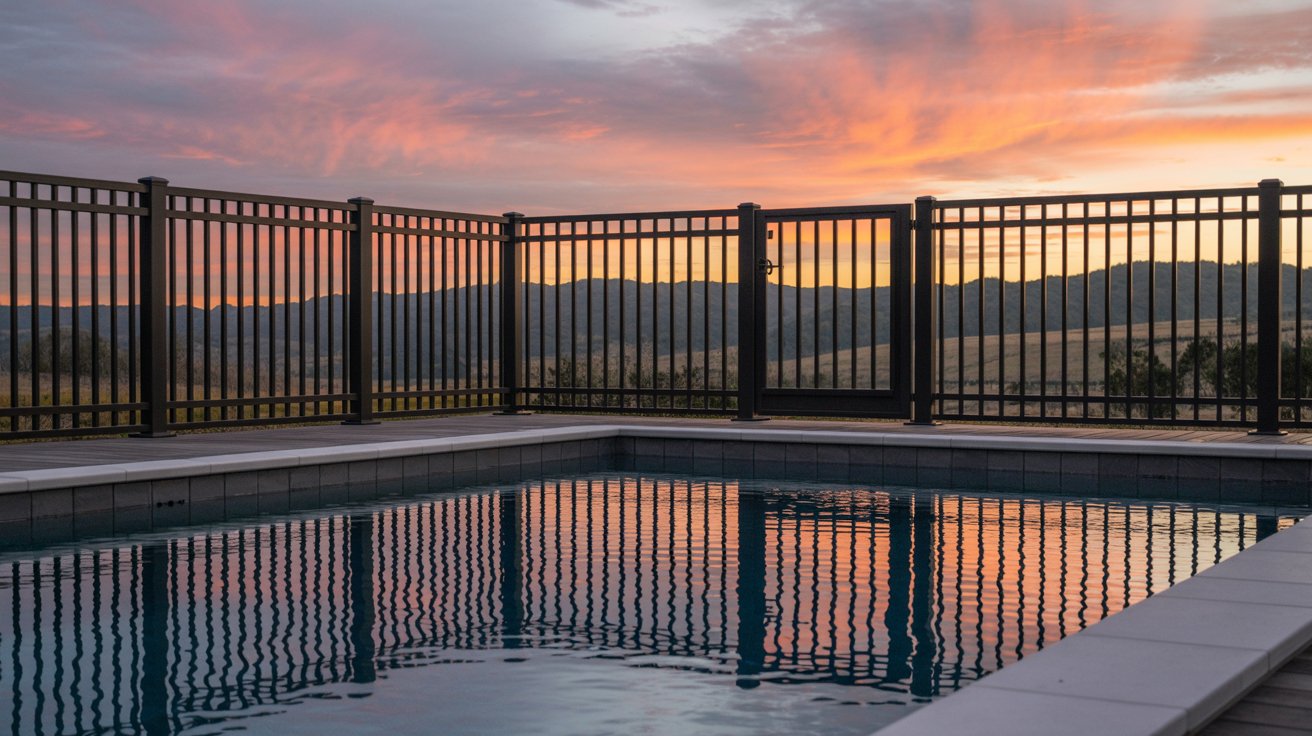
The most storm-resistant of the common residential fence types. Open-picket aluminum fencing lets wind pass through almost entirely, and properly set aluminum posts in concrete are rarely what fails — it's usually a section of panels that bends or the posts that heeled if the soil was saturated. Aluminum is our recommendation if you're in an exposed location or have had a wood fence fail more than once.
Vinyl (PVC) fencing
Vinyl privacy panels behave similarly to wood in high wind — they present a solid surface and can fail if posts aren't set deeply enough. Vinyl has the added vulnerability of becoming brittle in cold temperatures, which matters during ice storms and winter events that occasionally hit North Alabama. Our contractors have seen vinyl panels shatter from debris impact in ways that wood panels typically don't. For storm resistance, vinyl is not our first recommendation.
Chain link
Chain link is nearly immune to wind damage — the mesh bends and flexes without failing. It's not a privacy solution, but for pet containment or property boundaries, chain link in areas with severe wind exposure is hard to beat for resilience.
What to Expect in Storm Season: Timelines and Demand
North Alabama's peak storm season runs roughly March through May, with a secondary period in late fall. After any widespread event — a derecho, a significant tornado, or a major hail and wind storm — the regional demand for fence contractors spikes sharply and quickly. Lumber prices can move in the weeks following major regional storms as demand outpaces local supply.
Our honest advice: if your fence survived a storm with minor damage, get it assessed and repaired before the next severe weather event, not after. Fence that has hidden damage — a heeled post, a rail that's barely holding — will fail faster and more completely in the next storm. A $250 repair today is better than a $3,000 replacement six weeks from now when every contractor in the Tennessee Valley is booked out.
Frequently Asked Questions
Does homeowner's insurance cover storm fence damage in Alabama?
Most standard homeowner's insurance policies cover fence damage caused by storms, including wind, hail, and falling trees — it typically falls under "other structures" coverage. However, coverage depends on your specific policy, your deductible, and whether the damage meets your policy's threshold. Flood damage is almost always excluded from standard policies. Call your agent to confirm what applies to your situation, and make sure you have a written contractor estimate before the adjuster visit.
How long does storm fence repair typically take once we're scheduled?
For repairs — replacing posts, boards, or a damaged section — most jobs are completed in a single day once we're on-site. Full fence replacements take 1–3 days depending on the linear footage and fence type. The wait for scheduling is the longer variable, particularly in the weeks immediately following a widespread storm event. In normal conditions, we typically schedule within 1–2 weeks of the estimate.
My neighbor's tree fell through my fence. Who pays?
This is one of the most common questions we get after storms. In Alabama, as in most states, your own insurance generally covers damage to your fence regardless of where the tree came from — you're responsible for your own property. Your neighbor is typically only liable if you can demonstrate the tree was dead, diseased, or a known hazard that they failed to address after being notified. Talk to your insurance agent and, if needed, an attorney. From our end, we document the damage fully so you have a clear record for any claim.
Can I repair just the damaged sections of an older fence, or does it all need to match?
You can absolutely repair sections of an older fence. New cedar boards will look lighter than weathered boards for a season or two, then blend in as they gray. For painted or stained fences, we can often match the finish closely enough that the repair is not obvious. The bigger question is whether the undamaged sections are structurally sound enough to warrant repairing around them — we'll give you an honest assessment of whether partial repair makes financial sense or whether you're spending money on a fence that won't last another 5 years anyway.
Related Resources
- Fence Repair Services — What we repair, our process, and service area
- How to Choose a Fence Contractor — What to look for, and what red flags to avoid
- Fence Cost Guide — Material and installation pricing in North Alabama