
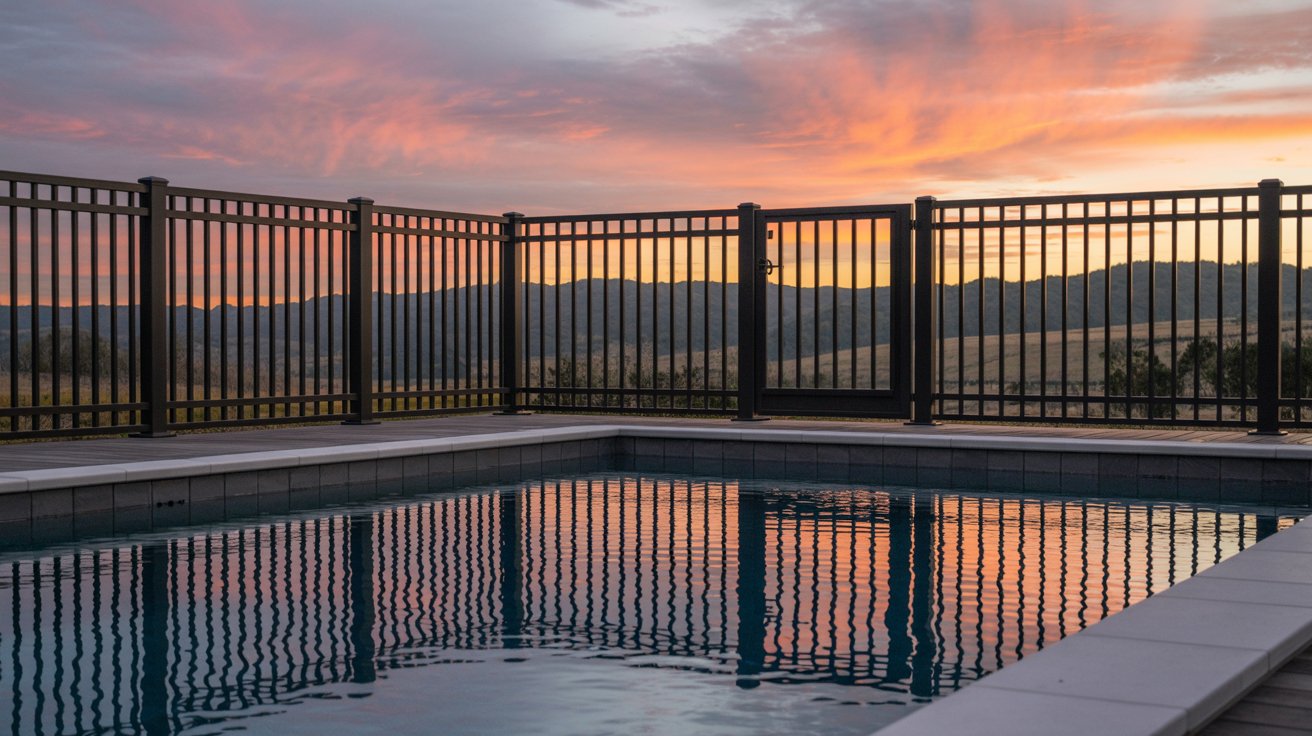
Alabama Pool Fence Requirements: Code, Height, and What Gets Homeowners Failed at Inspection
Our contractors have seen it more than once: a homeowner builds a beautiful pool, passes the pool inspection with flying colors, then calls us in a panic because they failed a separate fence inspection two weeks later. The gate wasn't self-closing. The latch was on the wrong side. The inspector gave them seven days to fix it or face a stop-work order on their entire project. Pool fence code is surprisingly specific, and in North Alabama, each jurisdiction layers its own rules on top of the state baseline. Here's what our contractors have learned after installing pool fencing in Huntsville, Madison, and across Madison County.
The Alabama State Code Baseline: Where It All Starts
Alabama adopted the International Residential Code (IRC) as its statewide building standard, and pool barrier requirements live under IRC Section R326 — specifically R326.6, which governs outdoor swimming pool barriers. The code is written to prevent unsupervised access by children under seven years old, and every requirement flows from that purpose.
The core requirements under IRC R326.6 are:
- Barrier height: Minimum 48 inches (4 feet) measured on the outside of the barrier — the side away from the pool
- Maximum opening size: No opening in the fence or gate may allow a 4-inch sphere to pass through
- Bottom clearance: No more than 4 inches between the bottom of the barrier and the ground
- Gates: Must be self-closing and self-latching; must open outward away from the pool
- Gate latch: Must be located on the pool side of the gate, positioned so a child on the outside cannot reach over and release it
- Latch height: If the release mechanism is less than 54 inches above the bottom of the gate, it must be on the pool side or shielded so it cannot be operated from the street side without a key or tool
Alabama also inherits IRC R326.6.4, which prohibits footholds and handholds on the outside of the barrier that would aid climbing. This is the rule that kills a lot of ornamental iron fences, which we'll cover in the materials section.
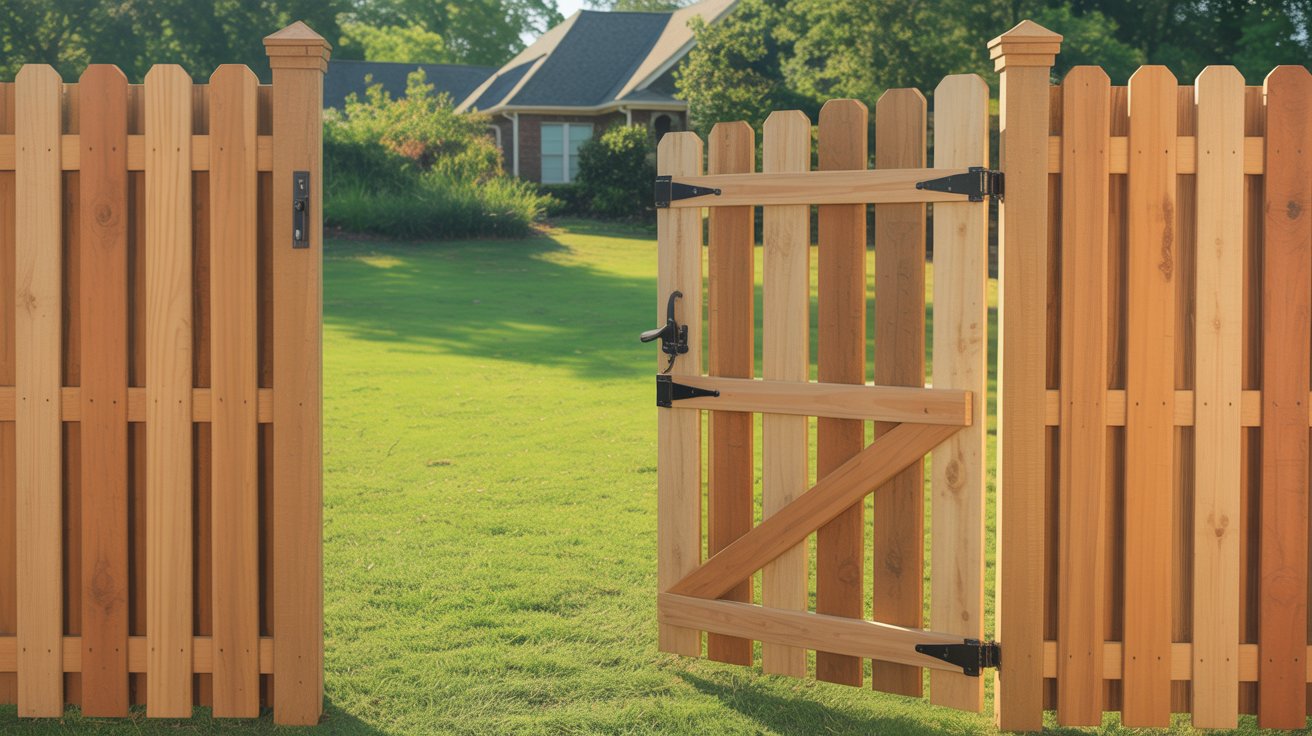
How Local Jurisdictions Layer On Top of State Code
State code is the floor. Huntsville, Madison City, and unincorporated Madison County each have authority to adopt local amendments that are equal to or stricter than the IRC. In practice, this means the same fence that passes inspection in unincorporated Madison County might get rejected inside Huntsville city limits.
| Jurisdiction | Minimum Height | Gate Requirements | Permit Required? | Notable Local Rules |
|---|---|---|---|---|
| Huntsville | 48 in. (IRC baseline) | Self-closing, self-latching; latch on pool side at 54 in. or higher | Yes — fence permit required even if pool permit pulled | Inspectors enforce the 4-inch sphere rule strictly on gate gaps; horizontal rail prohibition on pool-facing side enforced |
| Madison City | 48 in. (IRC baseline) | Self-closing, self-latching; double-acting gates prohibited without additional latching | Yes — separate fence permit required | Madison has adopted local amendments requiring pool barrier plans be submitted with the pool permit; fence inspection is scheduled after pool final |
| Unincorporated Madison County | 48 in. (IRC baseline) | Self-closing, self-latching per IRC R326.6 | Pool permit includes barrier; no separate fence permit typically required | Fewer local amendments; follows IRC more closely. Inspectors vary — some are strict on latch height, some are not. Don't count on leniency. |
One thing that catches people off guard in both Huntsville and Madison City: pulling a pool permit does not cover your fence. These are two separate permits with two separate inspections. Our contractors have had customers tell us the pool contractor said the fence was covered — it wasn't. If there's any question, call the building department directly and ask: "Does my pool permit include the barrier fence, or do I need a separate fence permit?" The answer in most of North Alabama is: separate permit.
The 5 Most Common Pool Fence Inspection Failures We See
Our contractors have retrofitted a lot of pool fences that failed initial inspection. Here's what we find most often:
1. Gate Latch on the Wrong Side
The most common failure, by a wide margin. The latch must be on the pool side — the interior face of the gate. Many homeowners (and even some contractors) install standard residential gate latches on the outside for convenience. IRC R326.6.3 is explicit: the release mechanism must be on the pool side. If it's below 54 inches from the bottom of the gate, it also cannot be operable from the outside by hand. We carry magnetic latches in our truck specifically for these situations. A magnetic latch with a key-operated exterior release satisfies the code cleanly.
2. Gate Doesn't Self-Close
The gate has to swing closed on its own from any open position, including fully open (180 degrees if the hinge allows it). Spring-loaded hinges lose tension over time, especially here in Alabama where the summer heat degrades spring metal faster than you'd expect. Our contractors have seen perfectly installed gates fail re-inspection six months later because the spring gave out. A gravity latch works on a sloped gate frame, but flat installations need a spring or hydraulic closer. When our contractors install pool gates, our contractors use heavy-duty spring hinges rated for pool applications and set the tension one notch above minimum so there's room to degrade without going out of compliance.
3. Gaps Under the Fence
The 4-inch bottom clearance rule is absolute. The problem in North Alabama is clay soil. Our local soil expands and contracts significantly through wet and dry seasons, which can lift fence panels and open gaps that didn't exist at installation. Our contractors have measured gaps as large as 6 inches under fence panels that were perfectly flush when we installed them two years earlier. The fix is either concrete aprons under the fence line, or tension wire along the bottom run of the fence fabric. For panel fences, our contractors use adjustable bottom rails or install a concrete mow strip when clay soil is a concern.
4. Decorative Features That Create Footholds
Ornamental iron is one of the most popular pool fence materials in Huntsville — it looks great, holds up forever, and never needs painting if it's powder-coated. But standard ornamental iron patterns have horizontal rails on both sides of the fence. IRC R326.6.4 prohibits footholds and handholds on the outside of the barrier that would help a child climb. If the horizontal rails are on the outside (street side), they're a climb assist and they fail. The fix: specify that the horizontal rails run on the pool-facing side only. This is something our contractors build into every aluminum and ornamental iron pool fence quote from the start. If an existing fence is failing for this reason, we can sometimes add a secondary barrier panel or a trellis-style deterrent on the exterior face, but a full reinstall is often cleaner.

5. Openings Larger Than 4 Inches
The 4-inch sphere rule applies to the fence, the gate, and the gap between the gate and the gate post. Decorative scrollwork, wide picket spacing, and gaps around gate hardware all get measured. Inspectors carry a 4-inch ball or template for exactly this purpose. Chain link passes only if the mesh opening is 1.75 inches or smaller — standard 2-inch chain link does not meet pool barrier code, even though it meets the general fence code. This surprises a lot of customers. If you have chain link around your pool, confirm the mesh size before scheduling your inspection.
Materials That Pass Easiest
After years of pool fence installs, here's our honest ranking of how different materials perform at inspection:
Aluminum (Our First Recommendation)
Aluminum pool fencing with picket spacing under 4 inches and horizontal rails on the pool side only is the cleanest solution our contractors have found. It satisfies the IRC foothold prohibition, never rusts, holds its finish in Alabama's humidity, and comes in pool-specific configurations (typically called "pool code" or "no-climb" styles) that are already designed to the spec. Our contractors use this material on the majority of our pool fence projects. See our aluminum fencing page for material details and photos.
Vinyl
Solid vinyl panel fencing passes easily — no openings, no footholds, and available in 48-inch heights. The limitation is heat warping over time and the fact that vinyl gates can sag in our summers, which affects self-closing performance. Our contractors have seen vinyl gate frames warp enough to bind against the post and hold the gate partially open. Not common, but worth knowing.
Chain Link
Chain link passes only with 1.25-inch mesh (sometimes spec'd as "pool mesh" or "diamond mesh"). Standard 2-inch residential chain link fails. The mesh also needs to be installed tightly — loose or sagging chain link can create deformable openings that exceed 4 inches under pressure. When our contractors install chain link for pool barriers, we run tension wire at top and bottom and pull the fabric drum-tight.
Wood
Wood board-on-board or solid panel fences can pass, but picket fences with wide spacing typically fail. The bigger issue with wood pool fences is longevity — the moisture environment around a pool accelerates rot, and a fence that develops gaps or leans after a few years creates a re-inspection problem. If a customer wants wood, we recommend solid cedar with stainless hardware and a minimum of one-inch ground clearance with a concrete mow strip underneath.
Retrofitting an Existing Fence That Doesn't Meet Code
If you bought a home with an existing pool and the fence doesn't meet current code, or if you made changes to your pool area that triggered an inspection, retrofitting is usually possible without a full replacement. Here's what we typically do:
- Gate latch issue: Replace existing latch hardware with a compliant magnetic or spring-loaded latch mounted on the pool side. This is a one-to-two hour fix.
- Gate not self-closing: Replace the hinge set with spring-loaded pool gate hinges. If the gate itself is warped, replacement is cleaner than patching.
- Gaps under fence: Add tension wire, pour a concrete mow strip, or install a bottom gravel berm with a concrete curb. Choice depends on the fence type and how much grade variation you have.
- Foothold issue on ornamental iron: If the horizontal rails face outward, the fence needs to be reinstalled in reverse or replaced. We have removed and reversed ornamental iron panel runs successfully, but it's labor-intensive. Get a quote before assuming it's cost-effective.
- Openings too wide: Add a secondary layer of small-mesh welded wire to the fence face, or replace the fence section. Adding material to a failing picket fence to bring spacing under 4 inches is rarely aesthetically acceptable.
HOA Rules vs. Code Requirements: Which One Wins?
Short answer: code always wins, but HOAs can be stricter. The IRC pool barrier requirements are a minimum safety standard — your HOA cannot override them in the direction of less restrictive. But your HOA can require a taller fence, a specific material, or a specific color scheme on top of what code requires. Our contractors have worked in HOA communities in the Research Park area and in Hampton Cove where the Architectural Review Committee required a specific aluminum fence style for pool barriers — the style happened to be fully code-compliant, so the homeowners just needed to confirm the gate hardware met the self-closing standard.
If your HOA and the code conflict (meaning the HOA allows something code prohibits), code wins. This occasionally comes up when an older HOA document permits a 36-inch pool fence — that document is superseded by the IRC 48-inch requirement. If you build to the HOA standard and the inspector fails you, the HOA document doesn't protect you.
Gate Hardware Deep Dive: What Self-Latching Actually Means
The IRC requires "self-latching" gates, but there are several hardware types that satisfy this requirement, and they're not all equal in durability:
Spring-Loaded Latches
The most common type. A spring mechanism keeps the latch in the closed position; opening requires lifting or pressing against the spring. They work well when new, but spring tension degrades. Our contractors have seen spring latches freeze open in cold weather (rare in North Alabama but it happens) and lose engagement tension over two to three summers. They pass inspection but require periodic tension adjustment.
Gravity Latches
A gravity latch uses the weight of the latch arm to drop into a catch when the gate closes. They work without spring tension and don't degrade the same way — but they require the gate to close perfectly plumb. If the gate shifts or sags even slightly, the latch arm misses the catch. On pool gates with heavy traffic, gravity latches are our second choice.
Magnetic Latches (Our Preference)
A magnetic latch engages automatically when the gate closes, requires no moving parts to wear out, and holds reliably regardless of gate temperature or humidity. Models with a key-operated exterior release satisfy the IRC requirement that the release mechanism be inaccessible from outside without a tool. We specify magnetic latches with an exterior key release on all new pool gate installations now. They cost more upfront — typically $80 to $150 more than spring hardware — but we haven't had a magnetic latch fail inspection or require a service call in two years of using them consistently.
Frequently Asked Questions
Does my pool permit cover the fence, or do I need a separate permit in Huntsville?
In Huntsville and Madison City, you need a separate fence permit for your pool barrier — your pool permit does not cover the fence. Our contractors have had customers told otherwise by their pool contractor, and it's created real problems at inspection time. Call the Huntsville Building Department at (256) 427-5000 or Madison City's Inspection Services and ask specifically: "Is the pool barrier fence included in my pool permit, or do I need a separate permit?" Get the answer in writing if you can. In unincorporated Madison County, the pool permit typically includes the barrier, but confirm with Madison County Engineering before assuming.
Our pool was installed in 2004. Does our existing fence have to meet current code?
This depends on what triggered the inspection. If you made changes to the pool or fence — added a gate, changed the fence line, replaced the pump system — the building department may require the entire barrier to be brought to current code as part of the new permit. If you haven't touched anything and haven't pulled a new permit, many jurisdictions don't retroactively enforce code changes on existing structures. That said, liability exposure is real: if a child is injured because a pre-code fence didn't meet current standards, the "we built it to the 2004 code" argument is cold comfort. We recommend bringing older pool fences up to current standard regardless of inspection status.
Can I use my house as part of the pool barrier?
Yes, under IRC R326.6.2, the wall of the dwelling may serve as part of the barrier, but with significant restrictions: doors leading from the house into the pool area must be equipped with an alarm (ASTM F2208 compliant) or a self-closing, self-latching door with the latch at 54 inches or higher. A sliding glass door with a standard track lock does not satisfy this requirement. Our contractors see this come up when a customer wants to fence three sides of a pool and rely on the house wall for the fourth side — the door hardware typically has to be upgraded, and that's a job for the pool contractor or a door specialist, not a fence company.
How long after the fence is installed should we schedule the inspection?
In Huntsville, give us three to five business days to finish the installation before calling for inspection — we need time to set posts in concrete and ensure everything has cured and settled properly. Then schedule through the Huntsville Building Department online portal. Typical inspection turnaround right now is three to seven business days. In Madison City, the inspection is often tied to the pool final, so coordinate with your pool contractor on timing. Don't schedule the pool final inspection until the fence is complete and has been up for at least 48 hours — if the gate needs tension adjustment after the concrete cures, we want to do that before the inspector arrives, not after a failed inspection.
Related Resources
- Aluminum Fencing by Rocket City Fence — Pool-code aluminum fence options, styles, and pricing
- Fence Permits in Alabama — How permits work across Huntsville, Madison, Decatur, and North Alabama
- Fence Installation in Huntsville, AL — Local requirements and what we do in the city
- Fence Installation in Madison, AL — Madison City fence and pool barrier specifics