
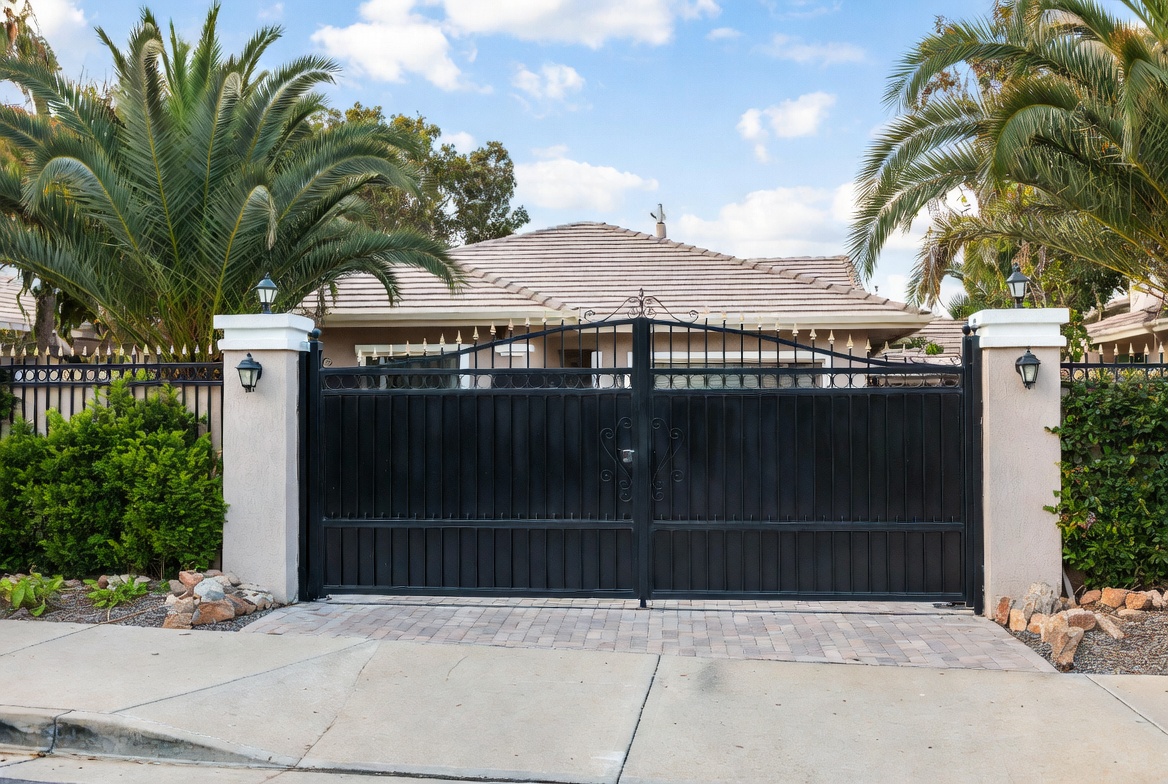
Driveway Gate Installation in Huntsville: Swing vs. Slide, Operators, and What Actually Lasts
We get a specific call at least a couple times a month from homeowners in Hampton Cove and Owens Cross Roads with a hillside driveway who want a swing gate. Nine times out of ten, they can't have one — and the reason isn't budget, it's physics. This guide covers what we'd actually recommend for each situation, based on the gates our contractors have installed across North Alabama.
Swing vs. Slide: The Decision That Determines Everything Else
Most of the driveway gate conversations we have start in the wrong place. Homeowners come in with a style in mind — usually a double swing because it looks right — and work backward from there. Our contractors do the opposite. We start with the driveway, and the driveway tells us which gate type will actually work.
Swing Gates
A swing gate operates exactly like a large door hinged to a post or column. It swings open in an arc, usually inward toward the property. That arc is the constraint that matters most. To swing a single 12-foot gate panel inward, you need at least 12 feet of clear, flat driveway surface behind it — and we prefer 14 feet to give vehicles room to pull forward without the gate nose clipping the bumper.
The other critical factor: grade. If your driveway drops away from the road by more than a few inches over that swing radius, the gate bottom drags on the ground at some point in its arc. We can use a drop post or a curved bottom rail to clear minor slope, but anything steeper than roughly a 5% grade across the swing path usually kills the option. This is exactly why so many Hampton Cove and Owens Cross Roads installs end up going with slide gates — those neighborhoods have hillside driveways where the grade change over 12 feet simply doesn't work for a swing.
Mechanically, swing gate operators are simpler. Fewer moving parts, easier to service, and less hardware exposed to the elements. The operator mounts to the post and drives the gate arm directly. For most residential installs — flat or gently sloped driveways, standard clearance — swing is the right call. We'd estimate this covers about 80% of the residential gate jobs we do in Huntsville and Madison.
Double Swing vs. Single Swing
Double swing gates split the opening into two panels, each swinging out from the center. They look more formal and suit wider openings where a single panel would be unwieldy. The trade-off: you need two operators instead of one, which adds cost and doubles the maintenance surface. If the opening is 12 feet or under, we almost always recommend a single swing. For 14 feet and above, double swing makes more sense both visually and mechanically.
Slide Gates
A slide gate rolls sideways along a track parallel to the fence line rather than swinging inward. Because it doesn't sweep an arc, grade is almost irrelevant — the gate travels horizontally regardless of what the driveway does beyond the opening. This is what makes slide gates the right answer for sloped driveways, and why we spec them for most of the hillside lots our contractors work on.
The constraint with slide gates is lateral space. The gate panel needs somewhere to go when it opens, which means you need at least the width of the gate panel — plus one foot of clearance — of clear fence line beside the opening. If you have a tight property line, a corner lot, or landscaping that comes right up to the driveway edge, slide gates can become difficult to accommodate.
Mechanically, slide gates have more moving parts: a track, a roller carriage, and in larger installations, a V-groove track buried in the drive surface. More to maintain, and more to fail. We factor this into our recommendations.
| Factor | Swing Gate | Slide Gate |
|---|---|---|
| Driveway grade | Flat to gentle slope only (<5% across swing radius) | Works on any grade |
| Space required | 10–14 ft clear inward of opening | Gate width + 1 ft along fence line |
| Mechanical complexity | Lower — fewer moving parts | Higher — track, rollers, carriage |
| Typical installed cost (single, with operator) | $1,800–$3,500 | $3,000–$6,000+ |
| Best for | Flat driveways, most residential lots | Hillside driveways, tight clearance inside property |
| Our honest recommendation | Right for ~80% of North Alabama residential installs | Right call when grade rules out swing |
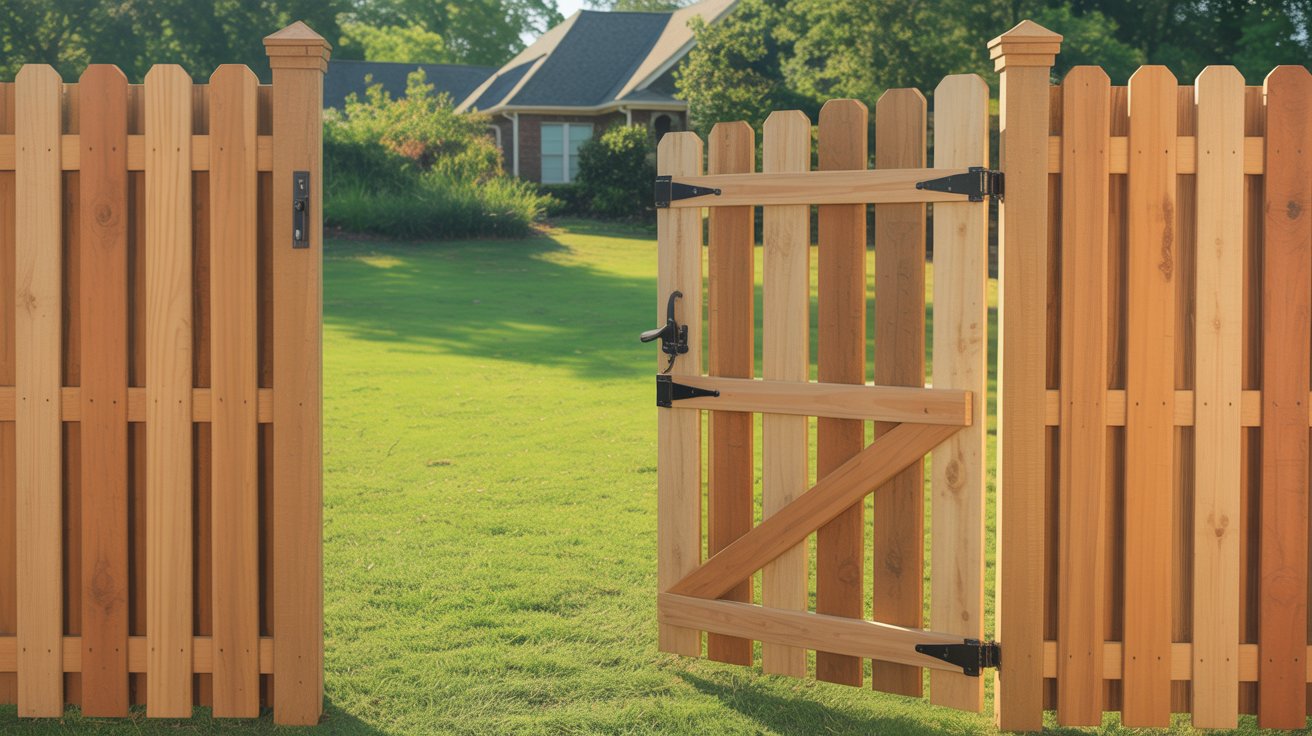
Gate Operators: What the Price Difference Actually Buys You
The operator is the component most homeowners underestimate — and the one that determines whether the gate works reliably in year three or needs a service call. Here's how we actually think about operator selection.
Solar vs. Wired
Solar operators are more popular than they deserve to be in the residential market. They work in Alabama's sun — we have enough direct exposure that a properly sized panel keeps the battery charged through most of the year. But "most of the year" is the problem. After a stretch of overcast days, especially in winter, the battery drops below operating voltage and the gate either stops responding or defaults open. Our contractors have had homeowners call us after a long cloudy week convinced their operator failed when the battery just needed a charge cycle.
Wired operators avoid this entirely. You run conduit, trench to the gate post, and the operator has consistent power. The trade-off is cost: trenching from the house panel to a gate post 50–100 feet down the driveway adds labor and materials. If the run is short and the driveway is not yet paved, wired is the clear choice. If the driveway is already paved and the run is long, solar becomes more attractive because trenching under existing concrete is expensive.
If you go solar, get a dual-panel system with a properly sized AGM battery, not the single-panel entry-level kits. The cheap single-panel operators with small batteries are what give solar a bad reputation.
Operator Brands and What Fails First
Our contractors install Linear, LiftMaster, and a few others depending on the application. Here's our honest read:
- Linear (formerly Linear Pro): The workhorse of residential swing gate operators. Simple, serviceable, parts available everywhere. Not the flashiest app integration, but it opens the gate reliably for years. This is what we'd put on our own driveway.
- LiftMaster / Chamberlain: Better smartphone integration via the myQ ecosystem, which matters if you want to open the gate remotely or check status. Good support infrastructure. Slightly more expensive but the app reliability is genuinely better than the budget alternatives.
- Budget operators (no-name or entry-level imports): Our contractors see these fail in a predictable sequence. First to go is usually the capacitor on the motor — they run hot, and the cheap caps degrade quickly in Alabama summers where operators can sit in 120-degree heat inside a steel enclosure. Next is the limit switch, which tells the operator where "fully open" and "fully closed" are. When it drifts, the gate either overtravel-slams or stops short. After that, the control board. The parts aren't available, so the operator becomes a $400 replacement rather than a $25 fix.
One note on North Alabama humidity specifically: operators installed in sealed, quality housings outlast the ones in cheap vented enclosures by a wide margin. Moisture intrusion is what corrodes control boards. We're not in coastal saltwater territory, but our summer humidity is real, and the board failure rate on cheap operators bears this out.
Access Control: Keypads, Fobs, Apps, and Loop Detectors
The operator is the engine; access control is the interface. Most residential gates end up with a combination of two or three of these:
- Keypad: Standard for most installs. Weather-rated, backlit, codes for family members plus a temporary code for service visits. Our contractors use the 5-button keypad setup most often — simple enough for everyone in the household to remember.
- Key fobs: One per vehicle. Fast and reliable. Lose one, reprogram the receiver. If you're in the car every time you use the gate, fobs are the lowest-friction option.
- Phone app: Pairs with LiftMaster myQ or comparable systems. Lets you open the gate from the road if you're expecting a delivery or letting in a contractor. Useful but requires Wi-Fi coverage at the gate — if your router doesn't reach the end of the driveway, you'll need a range extender.
- Loop detector: A wire loop embedded in the driveway that detects a vehicle's metal mass and triggers the gate to open from inside. Standard for exit — you drive toward the gate and it opens automatically, no fob required. We include these on most installs because it's the most friction-free exit experience.
- Video intercom: Entry-level intercoms have come down significantly in price and integrate with Ring and Nest ecosystems. Worth adding if you have frequent visitors or deliveries you want to vet.
Gate Materials in North Alabama's Climate
Not all gate materials respond the same way to our summers, our humidity, and the thermal cycling between January and August. Here's our honest ranking:
Aluminum: Our First Recommendation for Automated Gates
Powder-coated aluminum doesn't rust. Full stop. The powder coat bonds to the aluminum substrate in a way that doesn't require repainting every five years, and because aluminum doesn't expand and contract with temperature changes the way steel does, the finish holds longer. It's also lighter than steel, which means operators work less hard and motor life extends. For an automated driveway gate, aluminum is almost always our default recommendation.
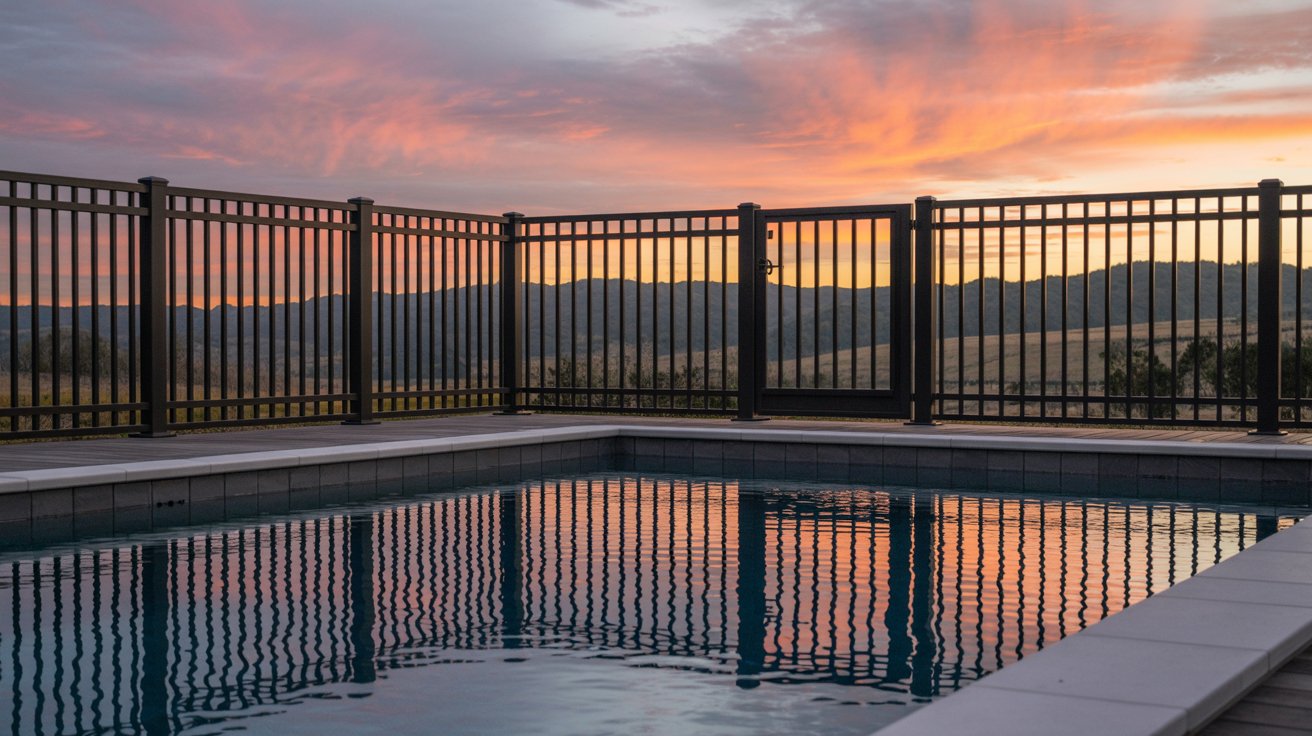
Ornamental Iron (Steel)
Steel looks heavier and more formal — and it is heavier, which matters for operators. A steel gate of comparable size makes the operator work harder on every cycle. More importantly, ornamental iron requires painting every five to seven years in this climate, and the weld points are where rust initiates first. The zinc-rich primer used at welds during fabrication does a reasonable job, but in our humidity it's not indefinite. If you want the look of ornamental iron but without the maintenance cycle, we'll sometimes spec aluminum fabricated to look like traditional iron work. You get the aesthetic without the upkeep.
Wood
We don't recommend wood for automated gates. Wood changes weight with moisture content — noticeably, across seasons. A cedar gate that weighs 85 pounds dry weighs more after a wet week, and operators are spec'd to a weight range. When the gate swings heavier than the operator expects, limit switches drift and the gate behavior becomes unpredictable. Wood also warps, which means the gate geometry changes and the latch alignment shifts. It's a maintenance headache for a manual gate; it's a reliability problem for an automated one.
Vinyl
Lightweight, but vinyl flexes in Alabama heat. A long vinyl gate panel in mid-summer direct sun can bow visibly. For short gate panels or manual operation, vinyl is fine. For automated gates over 10 feet wide, our contractors have seen enough flex-related track and latch issues that we don't spec it for automated installs.
Driveway Grade: The Question We Get Most From Hampton Cove and Owens Cross Roads
Hampton Cove and Owens Cross Roads both have a significant number of hillside lots — the kind where your driveway drops noticeably from the street toward the garage, or pitches across from one side to the other. This is the scenario where the swing-vs-slide question isn't theoretical.
When we walk a sloped driveway, we're looking at two things: the longitudinal grade (how much the driveway drops away from the gate opening toward the house) and the cross grade (whether the driveway tilts from side to side). A swing gate on a longitudinal slope hits the ground in its arc. A swing gate on a cross grade requires a custom mount or a drop leg to keep the bottom rail parallel to the slope — doable, but adds cost and creates a gap under the gate that may not be acceptable depending on why you're installing the gate.
Slide gates eliminate both problems. The gate travels laterally along a level track, independent of what the driveway surface does. If you're on a hillside lot and you're committed to an automated gate, budget for a slide gate from the start rather than trying to engineer around the slope with a swing mount.
Getting the Size Right: Standard Openings and Truck Clearance
This is more consequential than most homeowners expect. Standard recommendations:
- Single-vehicle opening: 10–12 feet. Works for standard cars and SUVs. If you regularly drive a full-size truck, aim for 12 feet minimum.
- Dual-vehicle opening: 14–16 feet. Allows two cars to pass or gives comfortable clearance for larger vehicles and trailers.
- Trailer and equipment access: If you're pulling a boat, camper, or utility trailer, measure the total width with mirrors extended and add 18–24 inches of clearance per side. Many homeowners undersize their gate and regret it the first time they bring a load home.
We also measure the height of any overhead entry — if you're building a brick column entrance with a decorative arch, clearance for lifted trucks and tall trailers needs to be part of the design conversation upfront.
Permits: Do You Need One for a Driveway Gate in Huntsville?
The short answer: usually yes, if the gate is part of a fence installation — and sometimes yes even if it's a standalone gate.
In Huntsville, fence permits are required for most new fence and gate installations. A driveway gate attached to a fence line is covered under the fence permit. A standalone automated gate — just gate panels and columns without an attached fence — falls into a grayer area that depends on the specific jurisdiction and whether it's classified as a structure.
In Madison, similar permit requirements apply, and if you're in an HOA community, you'll also need HOA approval before the city permit is relevant. HOA approval typically requires a site plan showing gate location, materials, and finish color.
Our contractors pull permits as part of our process. We'll identify what's required for your address at estimate time so there are no surprises. The permit fee itself is usually modest — the paperwork and wait time is the real variable, and it's better to have it handled before the crew arrives than to start work on an open permit violation.
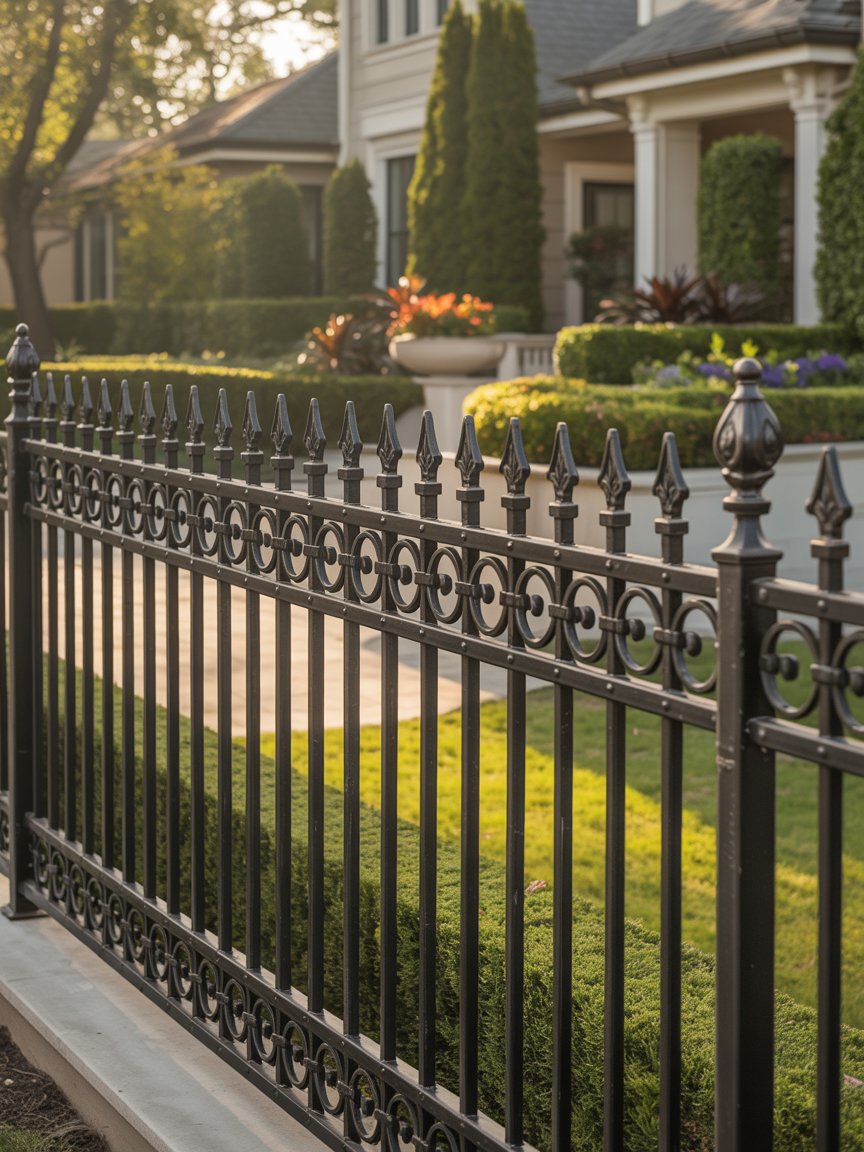
What Driveway Gates Actually Cost in North Alabama
We're going to give you ranges here, not quotes — there's too much variation in opening width, operator type, material, and site conditions for a single number to be meaningful. These are installed prices based on our work in this market:
- Single swing gate with operator: $1,800–$3,500. Lower end is a 10-foot aluminum gate with a mid-tier wired operator. Upper end includes premium operator, keypad, fob, and loop detector.
- Double swing gate with two operators: $2,500–$5,000. You're paying for two operator units, two arm assemblies, and the additional installation labor.
- Slide gate with operator: $3,000–$6,000+. The spread is wider because slide gate track work and heavier-duty operators push the high end up. Steep hillside installs or long driveway trenching runs push it further.
Column construction — brick, stone, or CMU — adds cost beyond these numbers and isn't included in these ranges. If your project includes decorative columns or a complete entryway, get a detailed line-item quote that separates gate, operator, and masonry.
Frequently Asked Questions
Can I put a swing gate on a sloped driveway?
It depends on the grade and which direction the slope runs. A mild slope across the swing arc — under about 5% — can sometimes be handled with a drop leg on the gate or a custom bottom rail. A significant longitudinal drop (the driveway falls away from the gate as you go toward the house) is usually a deal-breaker for swing gates because the bottom of the gate arc hits the driveway surface. In that case, a slide gate is the right choice. When we walk your driveway, we'll measure the grade and tell you clearly which type will work — and why.
How long do driveway gate operators last?
Quality wired operators from Linear or LiftMaster, properly installed and maintained, typically last 10–15 years in residential use. The maintenance items are simple: lubricate the hinges and operator arm annually, check the limit switch calibration every couple of years, and make sure the housing seals stay intact to keep moisture off the control board. Solar operators have the added variable of battery life — AGM batteries in a solar gate system typically need replacement every 3–5 years. Budget operators, in our experience, frequently need replacement within 5–7 years due to capacitor and board failures.
Do I need a permit for a driveway gate in Huntsville, AL?
Generally yes, if the gate is part of a fence installation — fence permits in Huntsville cover attached gates. A standalone automated gate without a fence may or may not require a separate permit depending on whether it's classified as a structure under the applicable building code at the time of your project. We identify the specific requirements for your address as part of the estimate process, so you'll know what's needed before work begins. If you're also in an HOA, add HOA approval to the checklist — most communities want to approve gate style and materials before you submit to the city.
What's the widest single swing gate panel that makes sense?
We generally max single swing panels at 14 feet. Beyond that, the panel weight and leverage on the hinge posts becomes significant, and most residential-grade operators aren't designed for that load. A 16-foot opening is better served by a 8-foot double swing, which splits the weight and leverage in half. Single panels over 14 feet also flex more as they age, which puts uneven stress on the operator arm. If your opening is 14 feet or wider, the double swing conversation is worth having.
Related Resources
- Gate Installation Services — Our full gate services page, including driveway, pedestrian, and commercial gates
- Aluminum Fencing — Why aluminum is our go-to material for automated gate systems in North Alabama
- Fence Cost Guide — Full pricing context for fence and gate projects in this market